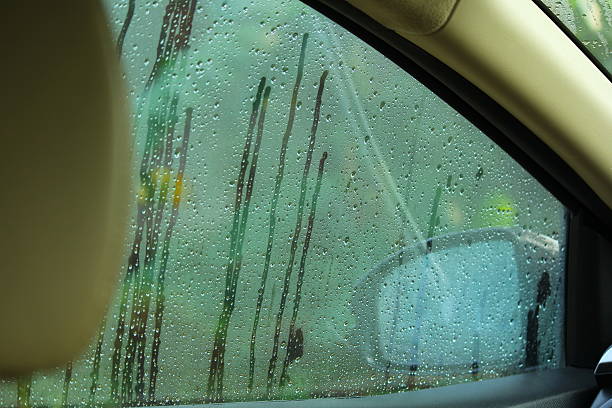
Car windows fog up when warm, moisture-filled air meets cooler glass surfaces. The moisture then condenses into tiny droplets, creating the familiar cloudy appearance that reduces visibility for drivers.
Humidity makes this process happen more easily because the air already contains significant water vapour. When temperatures change, that moisture has less capacity to remain suspended and instead settles onto nearby glass surfaces.
The effect is particularly noticeable during rainy mornings, damp evenings, and colder seasons. Wet clothing, umbrellas, shoes, and floor mats can also introduce additional moisture into the vehicle cabin.
Understanding the relationship between humidity, temperature, and condensation makes the problem easier to manage. Once drivers know why fog forms, they can choose more effective ways to clear windows.
Condensation begins when moist air inside the vehicle comes into contact with glass that is colder than the surrounding air. The glass cools the nearby air until it reaches its dew point.
At the dew point, air cannot hold all its existing water vapour. The excess moisture therefore changes from vapour into tiny liquid droplets that collect across the window surface.
This explains why windows can fog suddenly after passengers enter a cold vehicle. Their breathing releases warm, moist air, while the glass may remain significantly colder than the cabin.
Temperature differences can become even greater during humid weather. Outside air may contain substantial moisture, while the windows remain cool because of rain, wind, or lower outdoor temperatures.
Humid weather means there is already more water vapour present in the surrounding air. As a result, the vehicle cabin can reach its condensation point with relatively little additional moisture.
When people breathe inside a car, they continuously release water vapour. Several passengers can therefore increase cabin humidity quickly, especially when windows and doors remain closed.
Rain also contributes to the problem. Wet coats, damp shoes, umbrellas, and moisture brought inside by passengers gradually evaporate, adding more water vapour to the cabin air.
Because humid air is closer to saturation, only a modest temperature drop may trigger condensation. This is why windows often fog faster during wet weather than during dry, cold conditions.
The windscreen is particularly vulnerable because it is large and directly exposed to changing outdoor temperatures. Its broad surface can become cold enough for moisture to condense quickly.
Air from passengers' breathing also travels throughout the front cabin. Warm, moist air naturally reaches the windscreen, where it encounters the cooler glass surface and begins forming condensation.
The problem can become worse when ventilation is poor. If moist cabin air is not replaced with drier air, humidity continues increasing and condensation remains across the windscreen.
A dirty windscreen can also make fogging appear more noticeable. Grease, dust, and residue provide surfaces where moisture can collect, creating a hazier appearance that takes longer to clear.
The ventilation system plays an important role in controlling cabin humidity. Fresh outside air can replace moisture-filled cabin air, reducing the amount of water vapour available to condense.
Directing airflow towards the windscreen helps warm or dry the glass surface. This changes the conditions that allow condensation to form and can restore clear visibility relatively quickly.
Using the demisting setting is generally effective because the vehicle directs airflow towards the windscreen. Many modern cars automatically combine ventilation, heating, and air conditioning for faster results.
Drivers should avoid relying solely on recirculation when windows are repeatedly fogging. Recirculated cabin air can retain moisture, particularly when several passengers are breathing inside the vehicle.
Air conditioning is useful for demisting because it does more than simply make the cabin cooler. The system removes moisture from air as it passes across the evaporator.
Even when the weather outside is cold, air conditioning can therefore help reduce cabin humidity. Many vehicles automatically activate the air conditioning compressor when the windscreen demisting function is selected.
Once moisture levels fall, there is less water vapour available to condense on the glass. Combined with suitable airflow, this can clear the windscreen more effectively than heating alone.
Some drivers avoid air conditioning during colder weather because they associate it with cooling. However, its dehumidifying function can make it particularly useful when dealing with persistent interior condensation.
Heating works differently by raising the temperature of the windscreen and surrounding air. Warmer glass makes condensation less likely because the surface is moved further away from its dew point.
Directing warm air towards the windscreen can therefore evaporate existing moisture and prevent additional droplets from forming. This is why demisting systems often produce noticeable results within minutes.
However, heat alone may not always be enough when cabin humidity is very high. If moisture remains trapped inside the vehicle, condensation can return after the glass cools again.
The most effective approach often combines warm airflow with moisture removal. Heating raises the glass temperature, while ventilation and air conditioning help reduce the amount of moisture inside the cabin.
Simple habits can contribute significantly to fogging. Leaving wet coats, sports equipment, towels, or umbrellas inside the vehicle allows moisture to evaporate gradually into the cabin.
Damp carpets and floor mats are another common source. After rainy journeys, water carried inside on footwear can remain trapped in mats and continue increasing interior humidity.
Keeping windows permanently closed can also limit natural air exchange. Although closing windows is sensible during heavy rain or cold weather, ventilation remains important when moisture levels build.
Cleaning the interior regularly can help too. Removing wet items, drying mats, and keeping the windscreen clean reduces the conditions that encourage persistent condensation and improves overall visibility.
Drivers can reduce fogging by using the windscreen demisting setting before condensation becomes severe. Early ventilation prevents moisture from accumulating and can make journeys more comfortable.
Keeping the cabin reasonably dry is equally important. Remove wet belongings from the vehicle whenever possible, and allow damp mats to dry rather than leaving them inside overnight.
The windscreen should also be cleaned regularly using an appropriate automotive glass cleaner and a clean, lint-free cloth. A clean surface generally makes moisture easier to remove.
If windows repeatedly fog despite normal ventilation, investigate possible sources of excess moisture. Persistent dampness may indicate wet carpets, blocked drainage, water leaks, or another issue requiring attention.
Fogged windows are more than an inconvenience because they can significantly reduce visibility. Even a thin layer of condensation can obscure pedestrians, cyclists, road markings, traffic signs, and nearby vehicles.
Drivers should never begin or continue a journey with visibility seriously restricted by condensation. Taking a few moments to clear the windscreen is far safer than attempting to see through a fogged surface.
Using ventilation controls while driving can gradually restore clarity, but the system should be adjusted safely. Drivers should avoid unnecessary distractions and never wipe windows while the vehicle is moving.
Understanding why fog develops makes prevention easier. Managing humidity, maintaining ventilation, and keeping glass clean can substantially reduce condensation during wet and humid driving conditions.
Car windows fog up more easily in humid weather because moist air reaches its condensation point faster when it encounters cooler glass. Temperature differences therefore play a central role.
Passengers, wet clothing, damp mats, and breathing can all increase cabin moisture. When combined with already humid conditions, these factors make condensation appear quickly across the windscreen and other windows.
Effective demisting usually involves airflow, appropriate heating, and moisture removal through air conditioning. Keeping the vehicle interior dry also helps prevent condensation from repeatedly returning during journeys.
Most importantly, drivers should treat clear windows as a basic safety requirement. Understanding condensation and managing cabin humidity can make wet-weather driving safer, clearer, and considerably less frustrating.

This post has been authored and published by one of our premium contributors, who are experts in their fields. They bring high-quality, well-researched content that adds significant value to our platform.












Motor Guide provides useful automobile information, including car reviews, vehicle guides, maintenance tips, driving advice, automotive news, and helpful insights for drivers and enthusiasts.